
Vessel stowage planning
Cargo groups were assigned to ship zones with deck capacity, height, port sequence and loading access evaluated together.
- Industry
- Automotive logistics
- Decision family
- Spatial planning
- Evaluation scope
- Stowage-plan validation
Customer identity and identifying operational details are withheld.
The operating decision
Filling a deck is insufficient when cargo needed at the next port is blocked. Space use must be evaluated with port order and aisle access.
- Inputs
- Cargo-group volumes and heights · Loading and unloading ports · Decks and zones · Capacity · Paths between zones
- Decision
- Cargo group assigned to each zone · Volume allocated per zone · Improvement of the initial zone plan
- Constraints
- Deck height · Zone capacity · Aisle access · Loading and unloading sequence · Intermediate-port cargo changes
How it is approached
Match cargo to usable zones
Read cargo volume, height and port sequence against the ship’s deck and zone structure.
Build and improve a zone assignment
Add cargo groups to compatible zones and evaluate interference created by their loading and unloading order.
Recheck the voyage conditions
Apply cargo changes at intermediate ports and review loading and unloading interference for the relevant voyage.
See the deck allocation take shape.
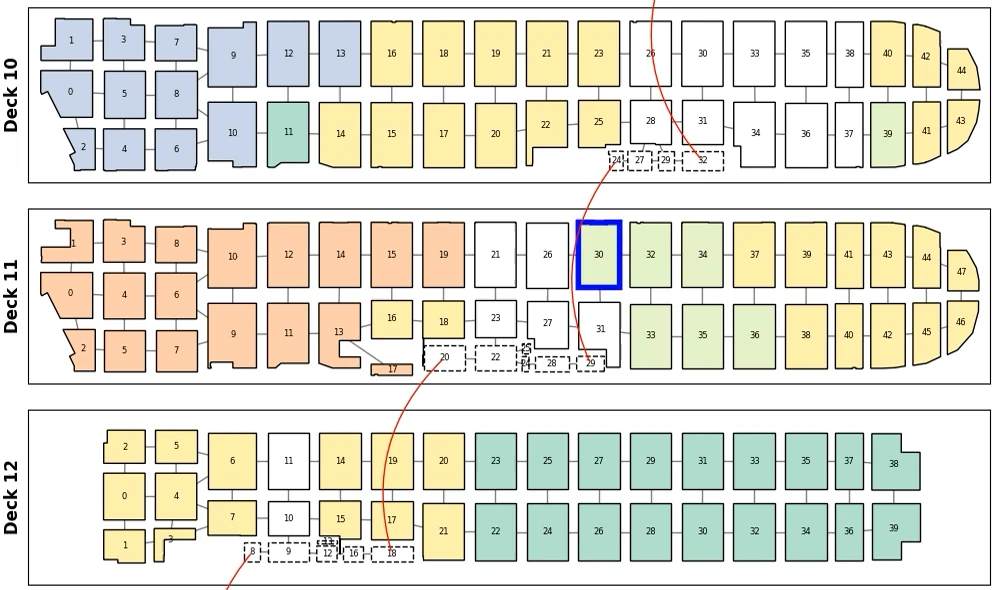
Stowage-plan validation
Validation & scope
The recording shows an initial zone assignment rather than precise parking coordinates or the full improvement process. Layout and score evidence cover separate voyage cases. Reported interference scores do not establish actual rehandling or operating-cost savings, and combined height-adjustment and existing-cargo conditions still need checking.
Related decisions
All applications
Bring the decision, its data and its constraints.