
Retail replenishment
Fresh-product order quantities were evaluated against demand scenarios and expiry-aware stock flow, then compared in stores under different ordering policies.
- Industry
- Retail / Fresh products
- Decision family
- Inventory control
- Evaluation scope
- In-store validation
Customer identity and identifying operational details are withheld.
The operating decision
Short shelf life and demand swings create a recurring trade-off between empty shelves, discarded products and sales opportunity.
- Inputs
- Sales history · Weather and promotions · Item and store traits · Stock by remaining shelf life · Customer purchase behavior assumptions
- Decision
- Order quantity per item · Priority among waste, profit and stock-outs
- Constraints
- Lead time · Minimum order units · Delivery cycle · Remaining shelf life
How it is approached
Prepare demand scenarios
Use sales history and item and store information to represent several plausible demand situations.
Replay expiry-aware stock flow
Model inbound stock, customer choice, sales and expiry day by day, keeping the real ordering conditions in the evaluation.
Choose the operating objective
Compare order candidates under different priorities, then review their stock-out and waste trade-off against the store’s chosen objective.
Demand scenarios. Store stock flow. One ordering decision.
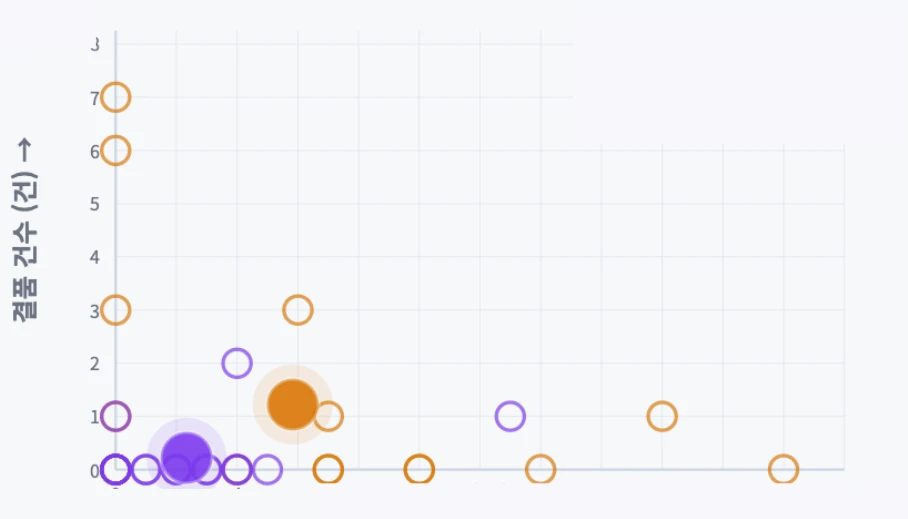
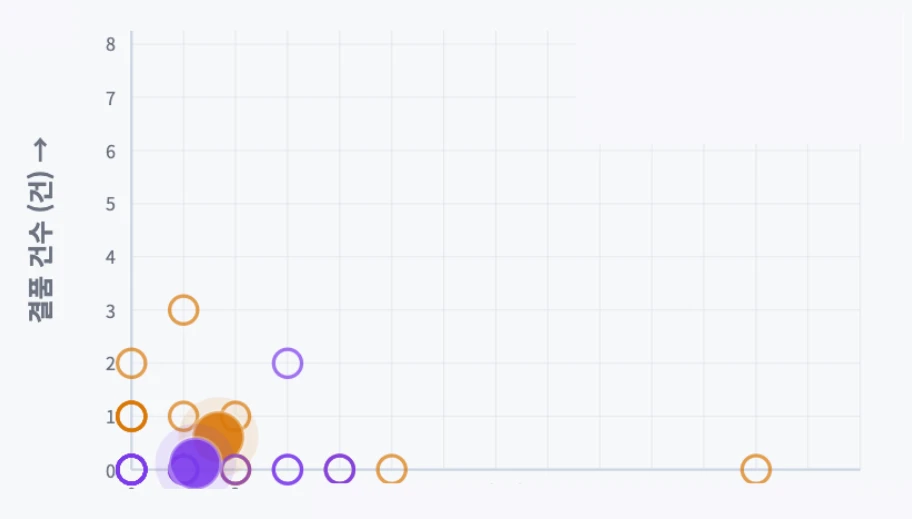
In-store validation
Validation & scope
The source includes in-store policy comparisons with manual and existing automated ordering. The manual comparison used a similar-demand period, while the automated comparison alternated policies and included period and demand differences. Lower stock-outs can raise waste, so each baseline and store condition must be read separately.
Related decisions
All applications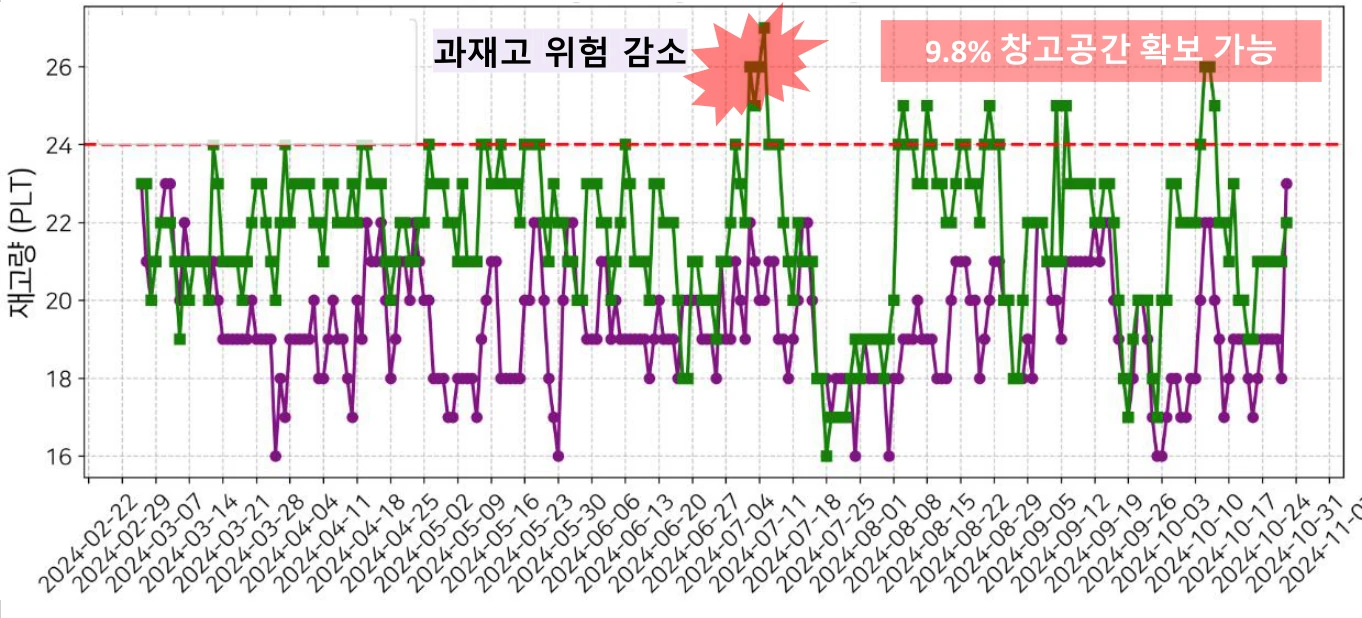
Bring the decision, its data and its constraints.