
Workstation item placement
Item placement across picking workstations was evaluated together with order sequencing to reduce the time an order waits for its slowest task.
- Industry
- Retail / Fulfillment
- Decision family
- Spatial planning
- Evaluation scope
- Historical-order simulation
Customer identity and identifying operational details are withheld.
The operating decision
When an order spans several workstations, one overloaded station can make the whole order wait while other stations finish.
- Inputs
- Historical orders · Item frequency · Workstation and equipment layout · Assumed item-processing times
- Decision
- Item placement per workstation · Order sequence · Permitted deferral of blocking orders
- Constraints
- Existing picking equipment · Workstation assignments · Re-sequencing allowance · Common processing-time assumptions
How it is approached
Spread item work
Keep the order sequence fixed first and change item placement to reduce workstation pile-ups.
Inspect orders that block completion
Review delayed orders and compare permitted re-sequencing alongside the placement change.
Compare complete order time
Measure the modeled interval from an order’s first workstation entry to its last task completion, keeping deferral assumptions visible.
The decision structure
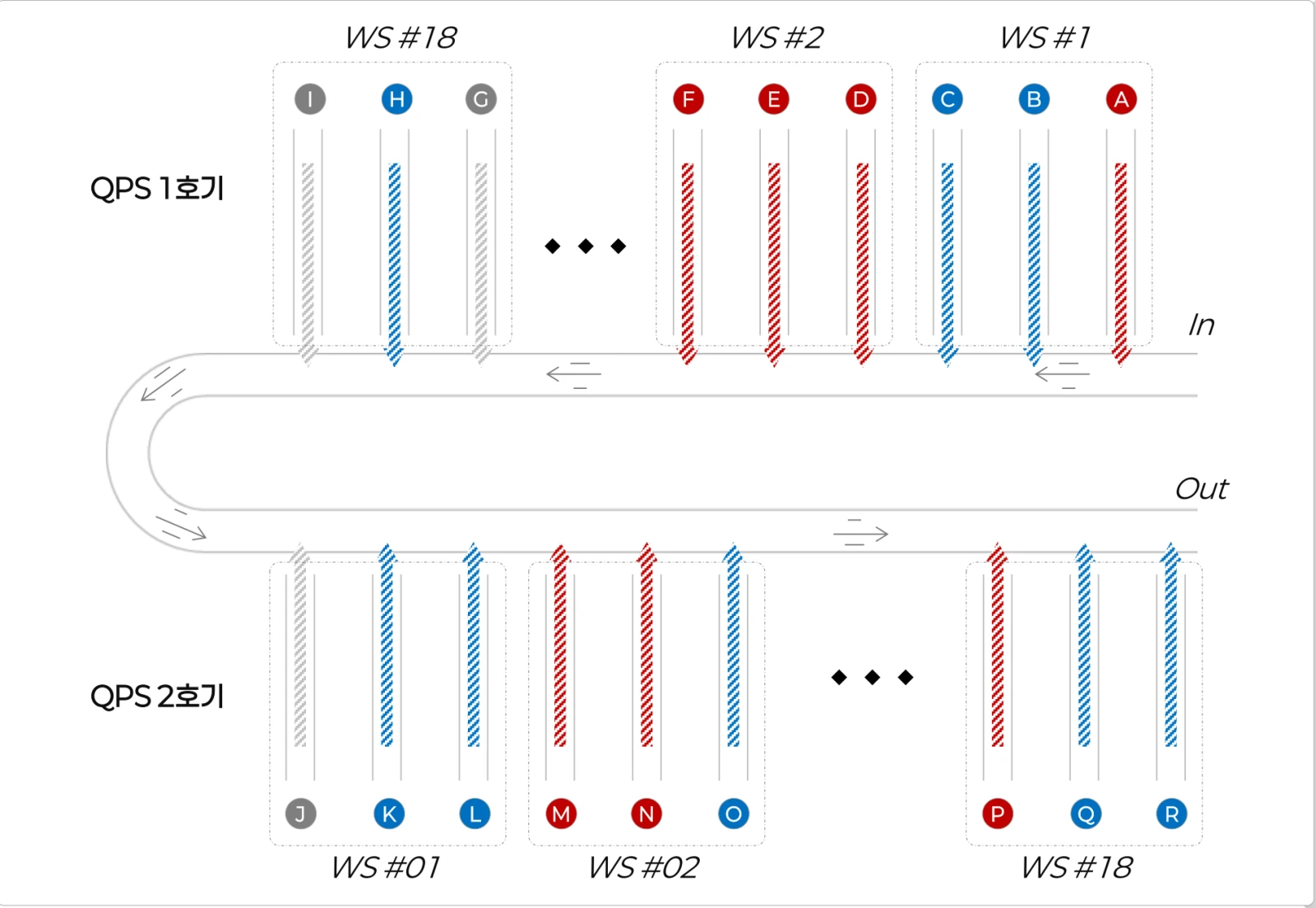
Historical-order simulation
Validation & scope
The comparison is a simulation on historical orders using the existing equipment and assumed processing time. Placement-only and placement-plus-sequence alternatives are separate; their reductions are not additive. On-site throughput and sales effects require separate validation.
Related decisions
All applications
Bring the decision, its data and its constraints.