
Process quality intelligence
Equipment conditions, process timing and inspection records were aligned to investigate which sustained deviations should be checked on high-defect days.
- Industry
- Manufacturing / Process quality
- Decision family
- Process intelligence
- Evaluation scope
- Exploratory analysis
Customer identity and identifying operational details are withheld.
The operating decision
Separate inspection and equipment records make it difficult to identify which process conditions warrant attention when defects increase.
- Inputs
- Equipment sensor histories · Process times per unit · Inspection results · Sensor set points
- Decision
- Sensor and period selected for investigation · Conditions prioritized for inspection · Saved analysis report
- Constraints
- Record alignment · Deviation size and duration · Limits of unit-level traceability
How it is approached
Align the records
Link the equipment environment, process timing and quality inspections on a common timeline so a sensor and period can be compared.
Separate spikes from sustained deviations
Inspect both the magnitude and duration of departures from set points, then compare them with high-defect days.
Carry observations into inspection
Use the observed relationships to narrow the next equipment checks and preserve the comparison in a report, while identifying gaps in unit-level traceability.
Define an event before asking what caused it.
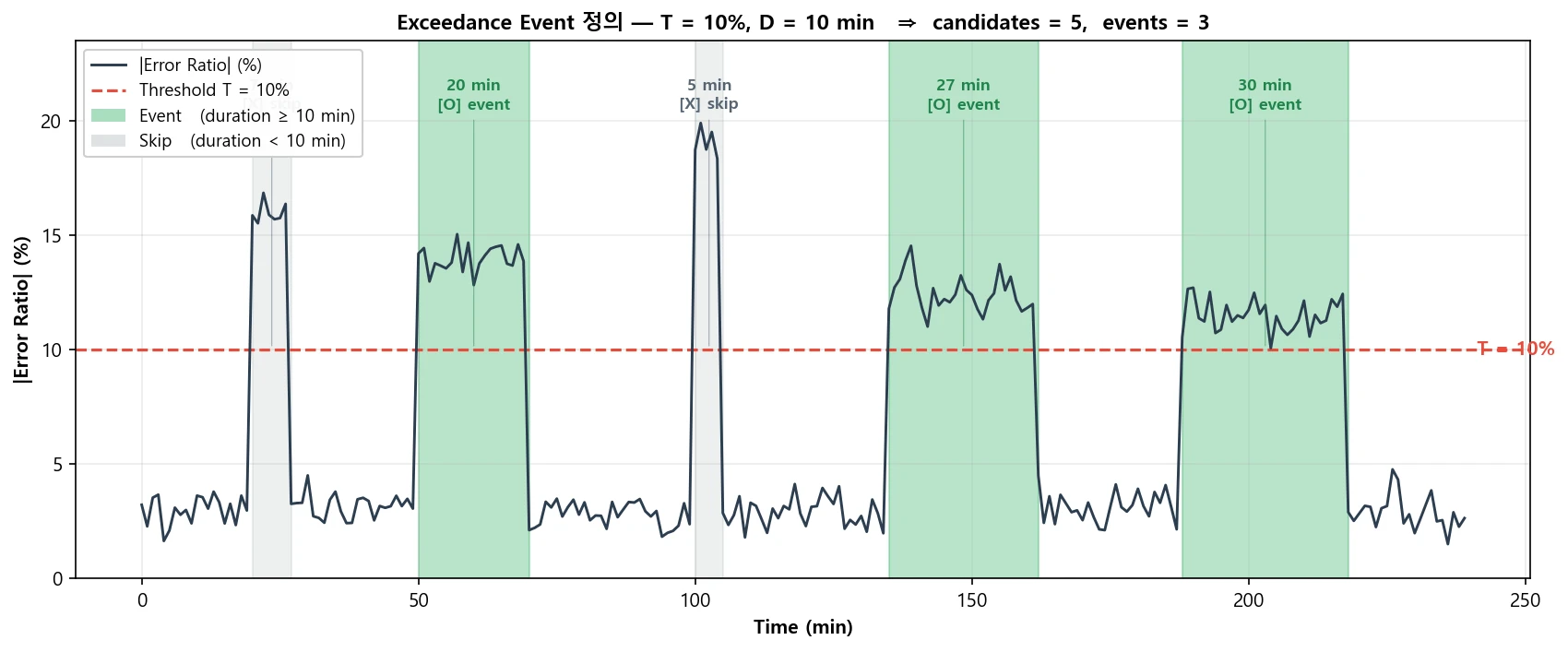
Exploratory analysis
Validation & scope
This is exploratory process-quality analysis, not a scheduling-optimization result. The source reports observed relationships and an analysis basis. Causality, defect reduction and energy savings were not validated, and tracing a single unit still required a direct sensor-to-unit link.
Related decisions
All applications
Bring the decision, its data and its constraints.